What is the meniscus and why does it tear?

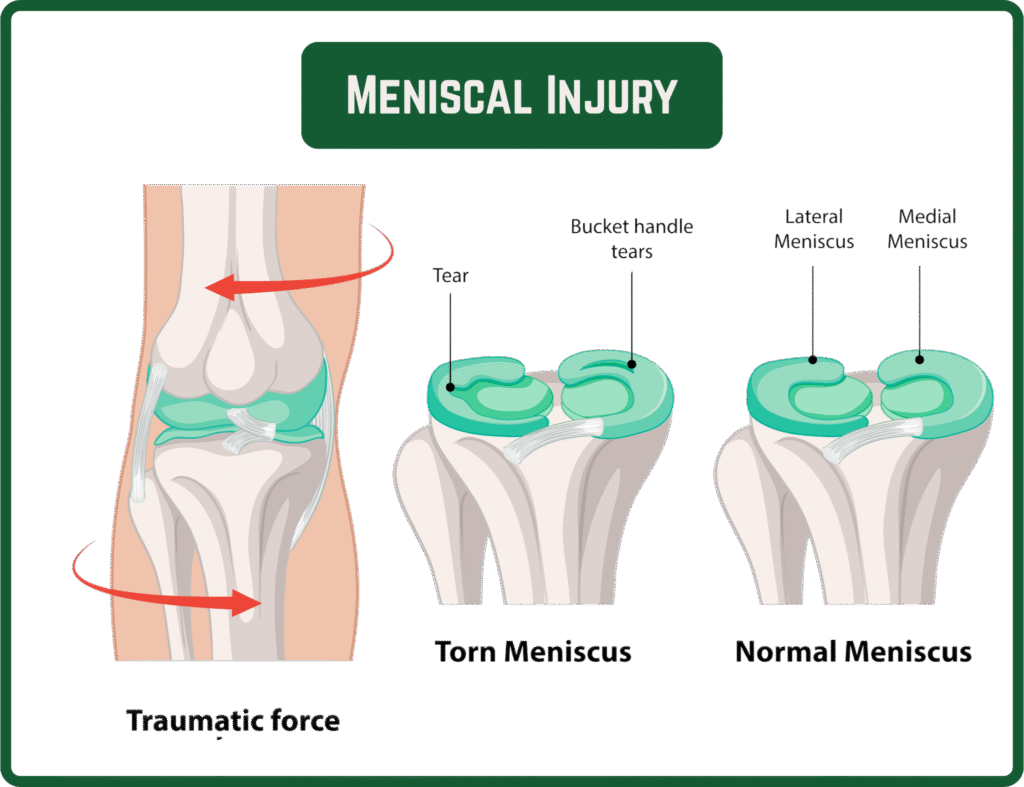
The meniscus is a C-shaped piece of cartilage in each knee that works as a cushion and shock absorber. You have two in each knee -one on the inside (medial meniscus) and one on the outside (lateral meniscus). 

If this cartilage tears, called a meniscal injury, you might notice pain, swelling, locking, or your knee giving way.
Why tears happen:

  • Sports injuries – sudden twists or impacts (common in football, rugby).
  • Degeneration – cartilage weakens with age, leading to wear-and-tear tears.
  • Accidents – awkward landings or falls.

Common Symptoms for Meniscal Injury

Typical signs of a meniscus tear include:

  • Sharp or persistent knee pain
  • Swelling within 24 – 48 hours
  • Stiffness or restricted movement
  • Locking, catching, or a clicking sensation
  • A feeling of the knee giving way

Treatment Options

Non-Surgical Treatments

Not every tear needs surgery. Meniscus damage treatment can also include:

  • Physiotherapy & exercise for meniscus injury
  • Anti-inflammatory medication.
  • Corticosteroid or hyaluronic acid injections.
  • Activity modification (avoiding twisting & impact sports).

Surgical Treatments

Recommended when pain and locking persist despite therapy, the tear is complex or causes instability, and preserving the meniscus is crucial for young, active patients.

  • The tear is stitched together to allow natural healing time.
  • Best for younger patients or those with tears in the outer “red zone”.
  • Success rates: 70-90% healing in younger patients (British Orthopaedic Association).
  • The torn portion is trimmed away.
  • Provides faster relief but reduces cushioning and increases long-term arthritis risk.
  • Often chosen for older patients with degenerative tears.
In rare cases, meniscal transplantation or root repair for severe injuries in younger adults.

How Surgery Is Performed (Keyhole Arthroscopy)

Step-by-step:

  1. Small incisions are made in the knee.
  2. A tiny camera (arthroscope) is inserted.
  3. Instruments repair or trim the damaged meniscus.
  4. The knee is cleaned, and the cuts are stitched or glued.
  5. Patients usually go home the same day.

The procedure lasts around 30-60 minutes. 
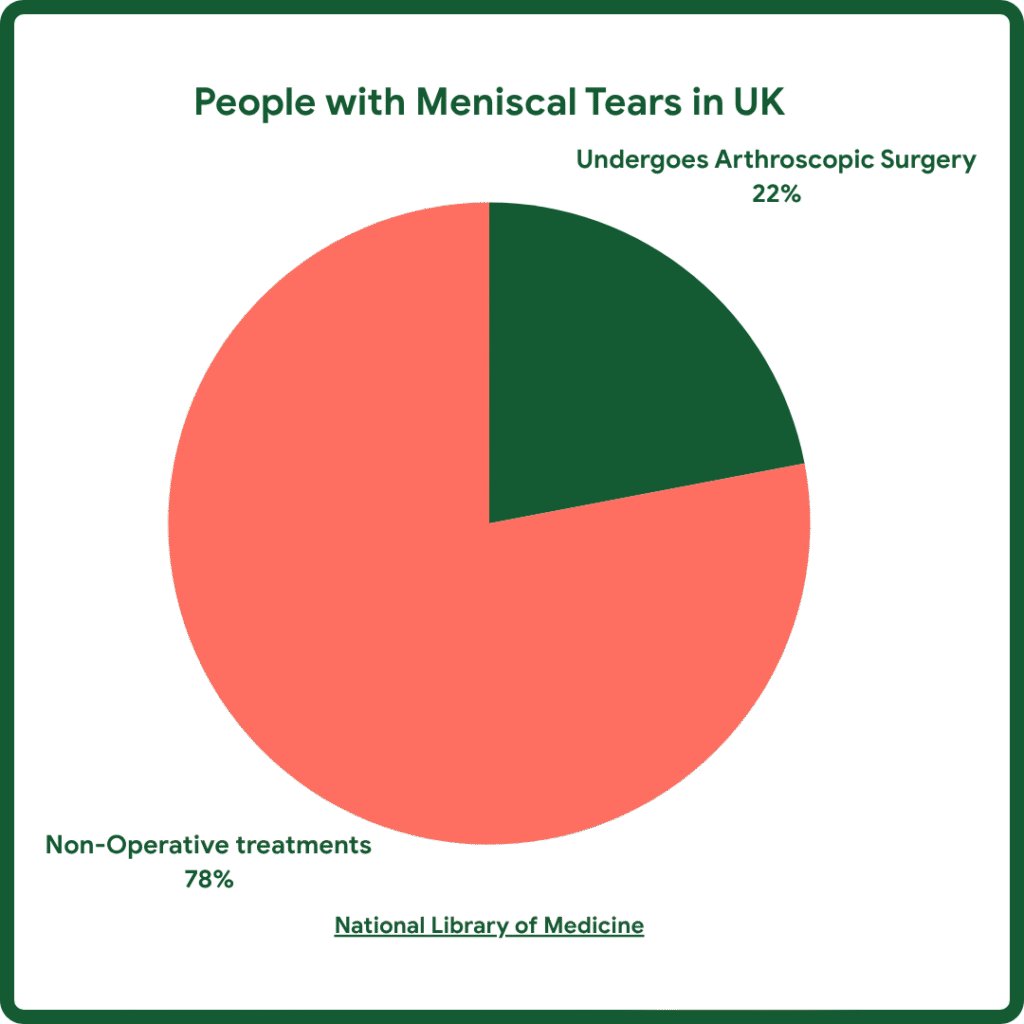
 

Note: Only 22% of UK patients diagnosed with a meniscal tear by MRI go on to have arthroscopic surgery and rest are treated non-operatively – source


Recovery Timeline

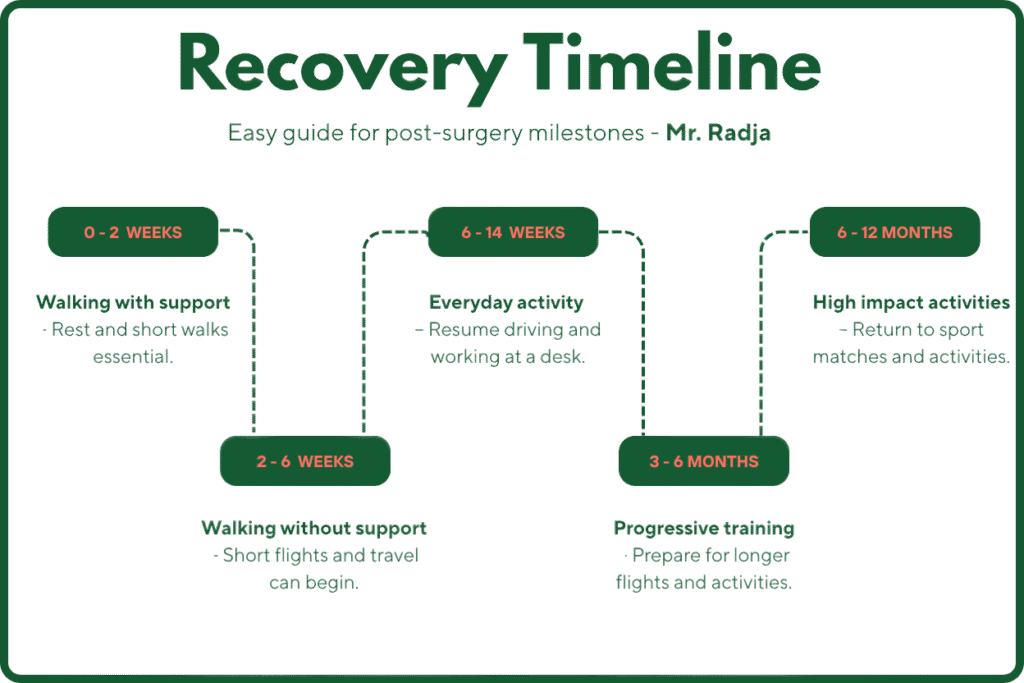
Recovery depends on whether you’ve had a meniscus repair (longer healing time) or removal (shorter recovery time).
Summary

  • Meniscal injuries are a leading cause of knee pain and locking especially in adults over 30. Many tears heal with rest and physiotherapy, but some need surgery for lasting knee stability. 
  • If you’re in Manchester and have knee pain, swelling, catching, locking, or giving way, book a specialist opinion with Mr. Radja for tailored advice.

FAQs

This depends heavily on your job.

  • Desk Jobs: If you have a sedentary office job, you can often return to work within a few days to a week, as long as you can keep your leg elevated when possible.
  • Physical Jobs: If your job involves heavy lifting, squatting, or prolonged walking (e.g., construction, nursing, retail), you will need significantly more time off. This could range from 4 to 6 weeks for a meniscectomy to over 3 months for a repair. Mr. Radja will provide a specific timeline based on your procedure and role.

Yes, arthroscopic knee surgery is typically performed under a general anesthetic (where you are fully asleep). Some patients may have a spinal anesthetic (which numbs you from the waist down). This is something you will discuss with the anesthetist and Mr. Radja before the operation to decide the safest option for you.

While keyhole surgery is very safe, all operations have small risks. The most common ones include infection, blood clots (DVT) in the leg, stiffness in the knee after the operation, and very small risks of nerve or blood vessel damage. These will be discussed in detail with you during your consultation.

You can travel if symptoms are mild, but get checked first if your knee is locking, unstable, or very painful. Follow your doctor’s advice, rest the knee, and avoid heavy activity.

This is highly dependent on your symptoms. High-impact activities (like running, jumping, or sports with twisting) are strongly discouraged as they can make the tear worse. However, low-impact exercises like swimming or using a stationary bike are often safe and even encouraged, as they keep the muscles strong without stressing the joint. Always listen to your body – if an activity causes pain, stop immediately.

It’s a valid concern. Degenerative changes are often a natural part of aging and can be present in both knees, even if only one is causing symptoms. While it doesn’t guarantee your other knee will develop a symptomatic tear, it’s important to protect it by maintaining a healthy weight, strengthening your thigh and hip muscles, and avoiding high-impact, repetitive stresses.

This is a crucial part of long-term recovery. Since a meniscectomy removes some of the knee’s natural cushioning, the key is to reduce the load on the joint. The best strategies are:

  • Muscle Strength: A dedicated, lifelong strengthening program for your quadriceps, hamstrings, and glutes. Strong muscles act as “shock absorbers” for the knee.
  • Weight Management: Maintaining a healthy body weight is the single most effective way to reduce stress on the knee joint.
  • Activity Choice: You may be advised to modify your activities, favoring low-impact sports (like cycling or swimming) over high-impact ones (like long-distance running on pavement).

Book Your Preservation Consultation.

Your Journey to a Pain-Free Knee Starts Now.