What are Knee Ligaments?


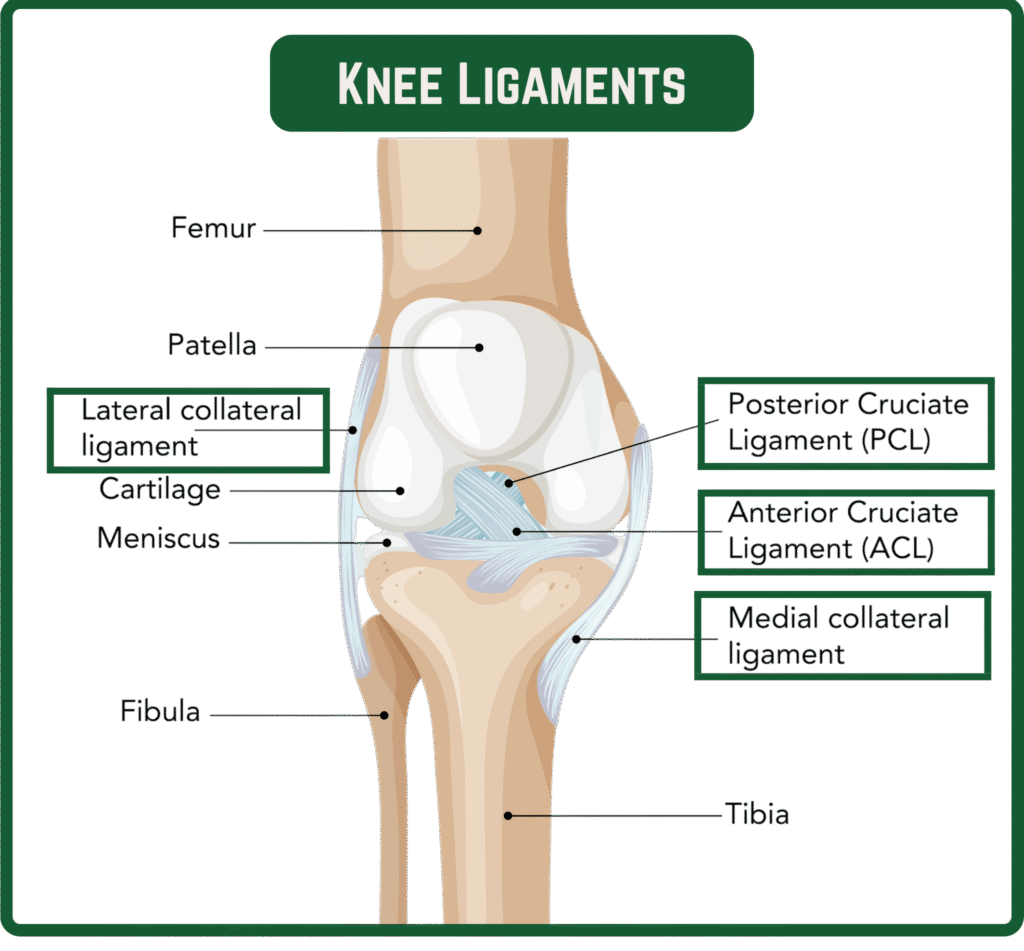
Ligaments are strong bands of tissue that connect bones and keep the knee joint stable. There are four main knee ligaments:

  • Anterior Cruciate Ligament (ACL): Controls forward movement and rotation of your shinbone.
  • Posterior Cruciate Ligament (PCL): Prevents the shinbone from moving backward.
  • Medial Collateral Ligament (MCL): Supports the inner knee, protecting against inward stress.
  • Lateral Collateral Ligament (LCL): Supports the outer knee and prevents excessive outward movement.

These structures work together to keep your knee moving smoothly during activities like walking, running, or changing direction.​

What causes a Knee Ligament Injury?

Ligament injuries often occur during:

  • Sudden twisting or pivoting (e.g., football, basketball)
  • Direct blows to the knee (tackles, falls, accidents)
  • Hyperextension (knee bending backwards)
  • Landing awkwardly from a jump or stopping suddenly

Other risk factors include weak or imbalanced leg muscles, inadequate warm-up, previous knee injuries, and wearing unsupportive footwear.

Symptoms & Diagnosis

  • Popping or snapping sensation at the time of injury
  • Sudden pain and swelling, sometimes within hours
  • Instability or the feeling your knee may “give way”
  • Difficulty walking, reduced movement, or limping
  • Tenderness or bruising around the knee (may appear later)

Your knee might also “lock” or feel stuck if cartilage is damaged as well.

A doctor will ask about your injury and examine your knee for signs of swelling, instability, and pain. Tests may include:

  • Physical examination
  • X-rays (to rule out fractures)
  • MRI scans (best for seeing ligament damage)
  • Ultrasound (sometimes used for soft tissue injuries)

Prompt diagnosis helps start treatment early and prevents long-term knee problems.

Treatment Options

  • POLICE (Protect, Optimal Loading, Ice, Compression, Elevation):
    • Rest but keep moving gently as soon as able
    • Use ice (10–20 mins at a time), compression bandage, raise your leg
    • Walk with crutches if needed; avoid running/massage/heat for 48–72 hours
  • Pain relief: Paracetamol, sometimes codeine, and anti-inflammatory gels/creams (ask your pharmacist for advice)
  • Physiotherapy: Tailored exercises to restore movement and gradually strengthen the knee
  • Braces/supports: Sometimes used early for stability
  • Gradual return to walking and daily activity as the pain improves

Surgery is usually reserved for:

  • Complete ligament tears, especially in athletes or very active people (often the ACL)
  • Multiple ligaments injured
  • Instability despite physiotherapy
  • Non-healing MCLs or LCL ruptures (rare)

Common procedures include ligament reconstruction or repair, often using tendons from your own body (or occasionally a donor). ACL surgery is usually “keyhole” (arthroscopic), and post-operative physiotherapy is essential for recovery.

Recovery Timeline

Injury/Treatment Recovery Milestones
Mild sprain (no tear) Most heal within 2–6 weeks
Partial tear (MCL/LCL) Healing in 6–12 weeks
ACL/PCL surgery 6–12 months to return to sport/high impact
MCL surgery (rare) Similar to ACL, up to 12 months


IMPORTANT NOTE: Your physiotherapist will personalize your plan. Return to sport only when your knee feels stable and strong.

Prevention Tips

  • Warm up thoroughly before sports or exercise
  • Strengthen leg muscles (especially quadriceps and hamstrings)
  • Practice proper landing and pivoting techniques
  • Wear correct footwear for your activity
  • Use knee pads or braces if recommended, especially if you have a history of ligament injury

FAQs

Tears typically cause more swelling, pain, and instability. Only a professional exam and scans can tell for sure.

No. Most mild sprains and partial tears heal with rest and rehab; surgery is mainly for severe tears or ongoing instability.

With a mild injury, you may walk with support within days. Always follow your specialist’s advice.

Most people recover well, but severe tears (especially of the ACL) may make some sports riskier for re-injury.

Strong, balanced leg muscles, good technique, and proper gear can help reduce your risk.​

You can travel if symptoms are mild but get medical advice first if your knee is very painful or unstable. Use support and avoid intense activity.

Book Your Preservation Consultation.

Your Journey to a Pain-Free Knee Starts Now.