What is the meniscus and why does it tear?
The meniscus is a C-shaped piece of cartilage in each knee that works as a cushion and shock absorber. You have two in each knee -one on the inside (medial meniscus) and one on the outside (lateral meniscus).
If this cartilage tears, called a meniscal injury, you might notice pain, swelling, locking, or your knee giving way.
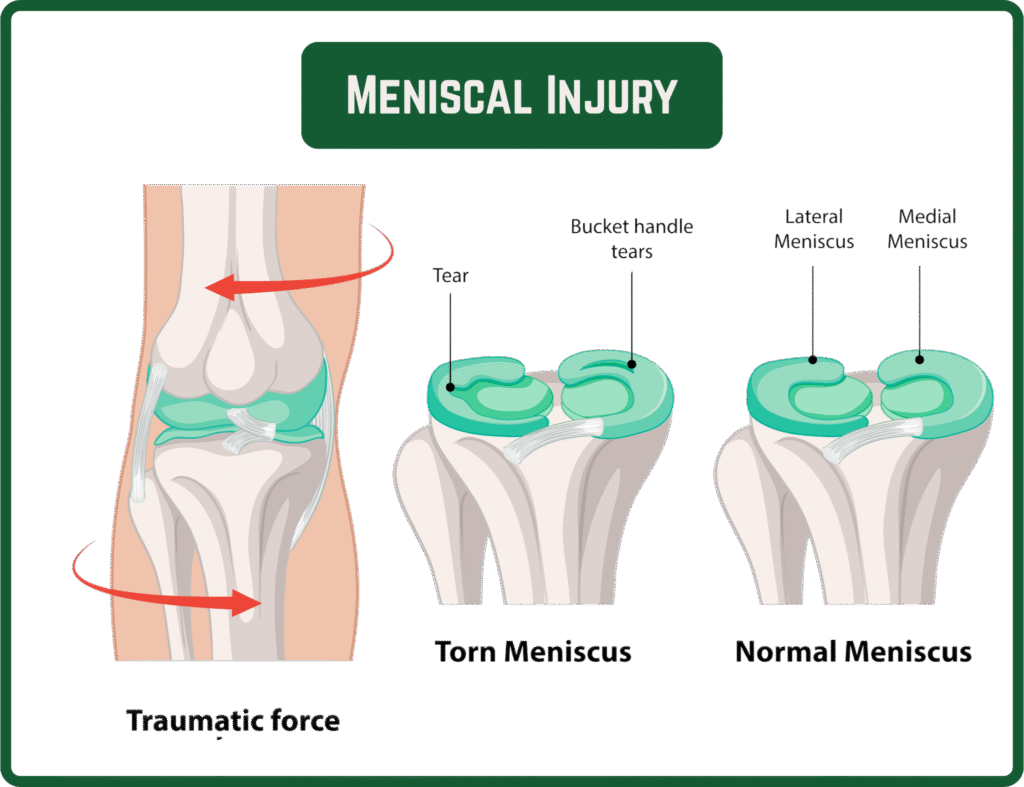
Why tears happen:
- Sports injuries – sudden twists or impacts (common in football, rugby).
- Degeneration – cartilage weakens with age, leading to wear-and-tear tears.
- Accidents – awkward landings or falls.
Common Symptoms for Meniscal Injury
Typical signs of a meniscus tear include:
- Sharp or persistent knee pain
- Swelling within 24 – 48 hours
- Stiffness or restricted movement
- Locking, catching, or a clicking sensation
- A feeling of the knee giving way
Treatment Options
Non-Surgical Treatments
Not every tear needs surgery. Meniscus damage treatment can also include:
- Physiotherapy & exercise for meniscus injury
- Anti-inflammatory medication.
- Corticosteroid or hyaluronic acid injections.
- Activity modification (avoiding twisting & impact sports).
Surgical Treatments
Recommended when pain and locking persist despite therapy, the tear is complex or causes instability, and preserving the meniscus is crucial for young, active patients.
How Surgery Is Performed (Keyhole Arthroscopy)
Step-by-step:
- Small incisions are made in the knee.
- A tiny camera (arthroscope) is inserted.
- Instruments repair or trim the damaged meniscus.
- The knee is cleaned, and the cuts are stitched or glued.
- Patients usually go home the same day.
The procedure lasts around 30-60 minutes.
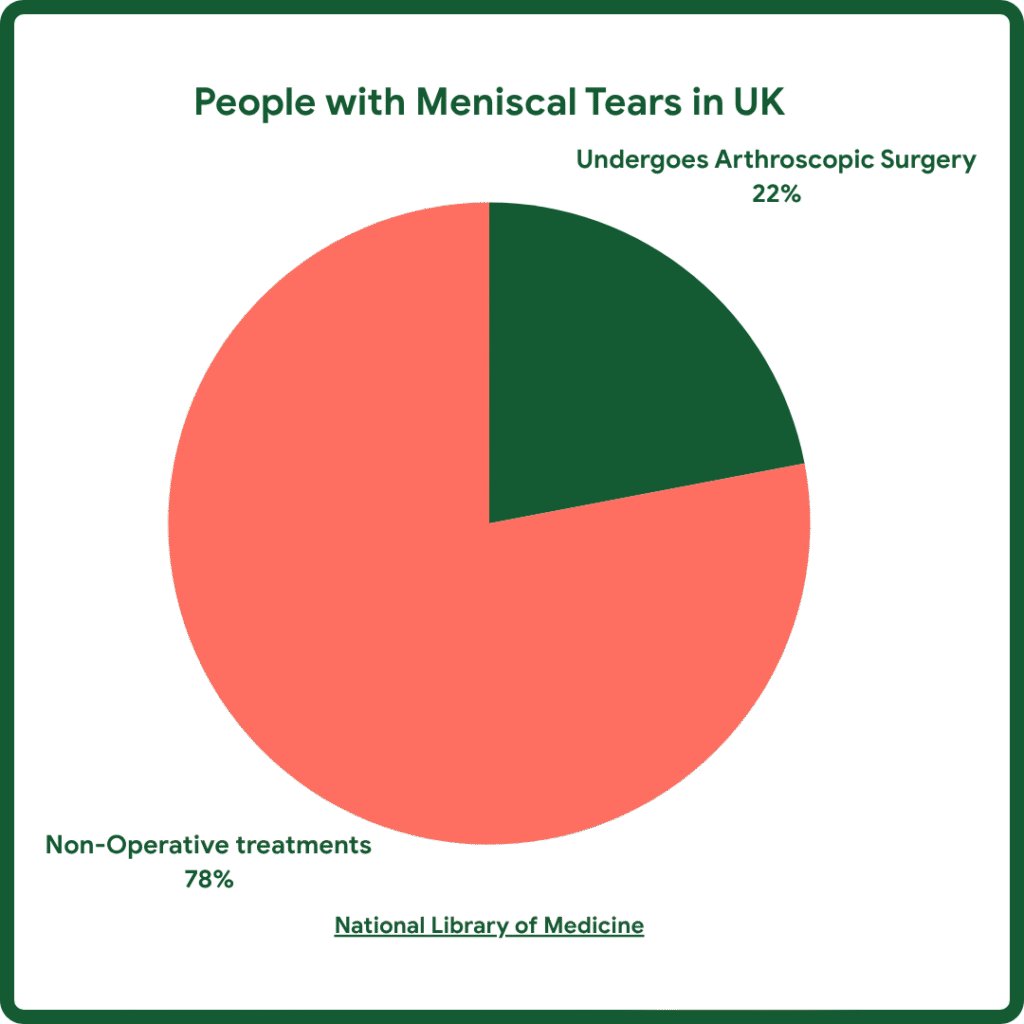
Note: Only 22% of UK patients diagnosed with a meniscal tear by MRI go on to have arthroscopic surgery and rest are treated non-operatively – source
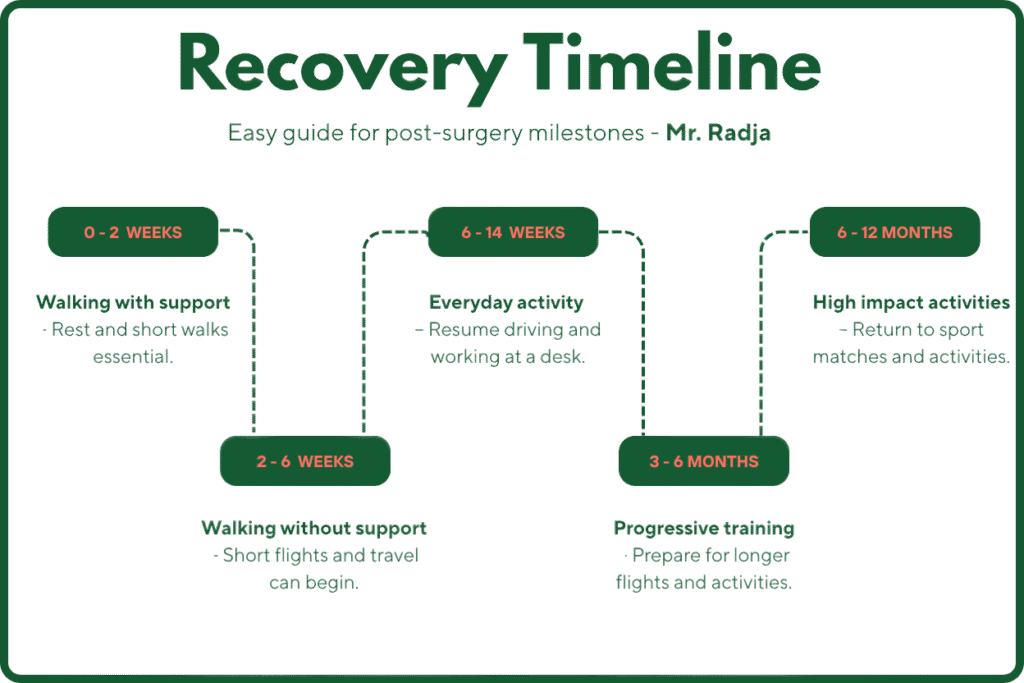
Recovery Timeline
Recovery depends on whether you’ve had a meniscus repair (longer healing time) or removal (shorter recovery time).
Summary
- Meniscal injuries are a leading cause of knee pain and locking especially in adults over 30. Many tears heal with rest and physiotherapy, but some need surgery for lasting knee stability.
- If you’re in Manchester and have knee pain, swelling, catching, locking, or giving way, book a specialist opinion with Mr. Radja for tailored advice.